
























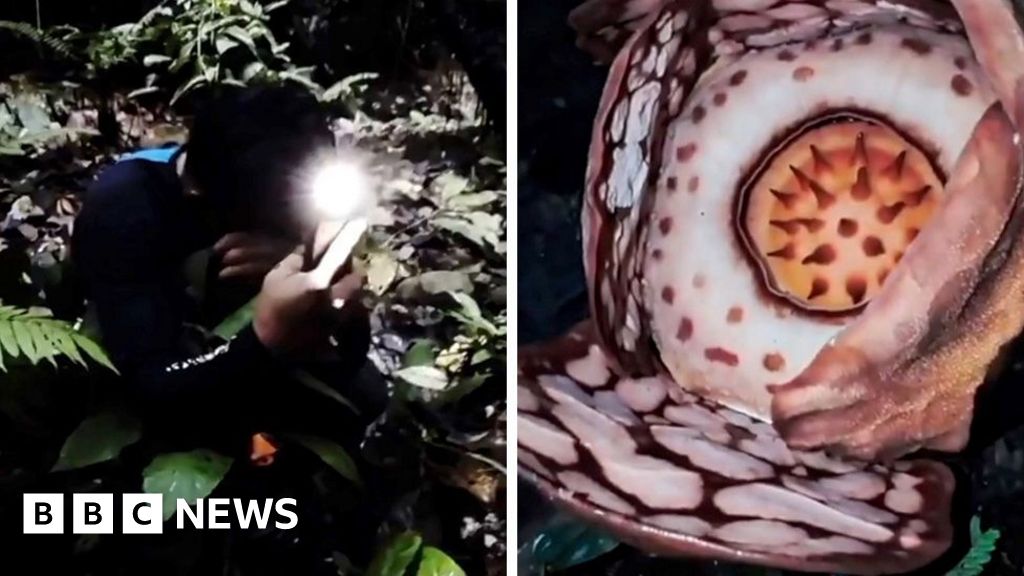
Watch: Moment researcher finds rare flower after 13-year search
Researcher Septian Andriki collapsed in tears upon discovering the rare Rafflesia hasseltii plant in Indonesia.

Researcher Discovers Rare Flower After 13-Year Search
In a remarkable moment of perseverance and dedication, a researcher has finally discovered a rare flower after searching for more than a decade. The find took place in a remote mountainous region where the flower had not been seen in the wild for decades.
Dr. Emily Carter, a botanist specializing in rare plant species, had been tracking historical records and local reports for 13 years in hopes of finding this elusive plant. Her efforts came to fruition during an expedition last week, when she spotted the flower blooming amidst rocky terrain and sparse vegetation.
Witnesses who accompanied Dr. Carter described the moment as magical. The flower, known for its delicate petals and vibrant colors, stood out sharply against the muted landscape. The team captured the moment on video, showing Dr. Carter kneeling beside the plant, carefully documenting its characteristics and taking measurements for research purposes.
Significance of the Discovery
The flower, which belongs to a species thought to be nearly extinct, is of great interest to scientists and conservationists. Its rediscovery provides an opportunity to study its biology, reproductive habits, and habitat needs. Experts hope this will lead to efforts to protect the plant and prevent it from disappearing again.
Dr. Carter emphasized the importance of patience and persistence in scientific research. She explained that years of careful observation, mapping of previous sightings, and collaboration with local communities were key factors in locating the plant.
Conservation Efforts Ahead
Now that the flower has been rediscovered, researchers plan to work with environmental organizations to monitor its growth and ensure its survival. The surrounding habitat will be studied to understand how human activity and climate change may have affected the species over time.
The discovery has inspired both the scientific community and the public, showing the rewards of dedication and highlighting the importance of preserving the natural world.
Dr. Carter hopes that this finding will encourage more young scientists to pursue long-term projects, reminding them that persistence can lead to extraordinary discoveries.
What's Your Reaction?