

















AMLC vows to tackle illegal casinos posing as small businesses
THE ANTI-MONEY Laundering Council (AMLC) said it will act against illegal casino operators that disguise gambling proceeds as ordinary business sales, such as payments routed through beauty salon or bakery merchant accounts.


By Katherine K. Chan, Reporter
THE ANTI-MONEY Laundering Council (AMLC) said it will act against illegal casino operators that disguise gambling proceeds as ordinary business sales, such as payments routed through beauty salon or bakery merchant accounts.
“Their activity gives them away,” the AMLC told BusinessWorld in an e-mail. “A salon that receives thousands of small payments after midnight is transacting in amounts not commensurate with its business, with no apparent economic justification.”
While it cannot disclose specific cases, AMLC assured the public that it will tackle any report on illegal online casinos in the country.
“The AMLC does not confirm or discuss specific reports, intelligence, or investigations; Section 8-A of the AMLA (Anti-Money Laundering Act) requires that such information be kept confidential,” it said.
“Where such activity is detected or reported, the AMLC, together with the competent authorities, will act to identify, investigate, and address the risks involved,” it added.
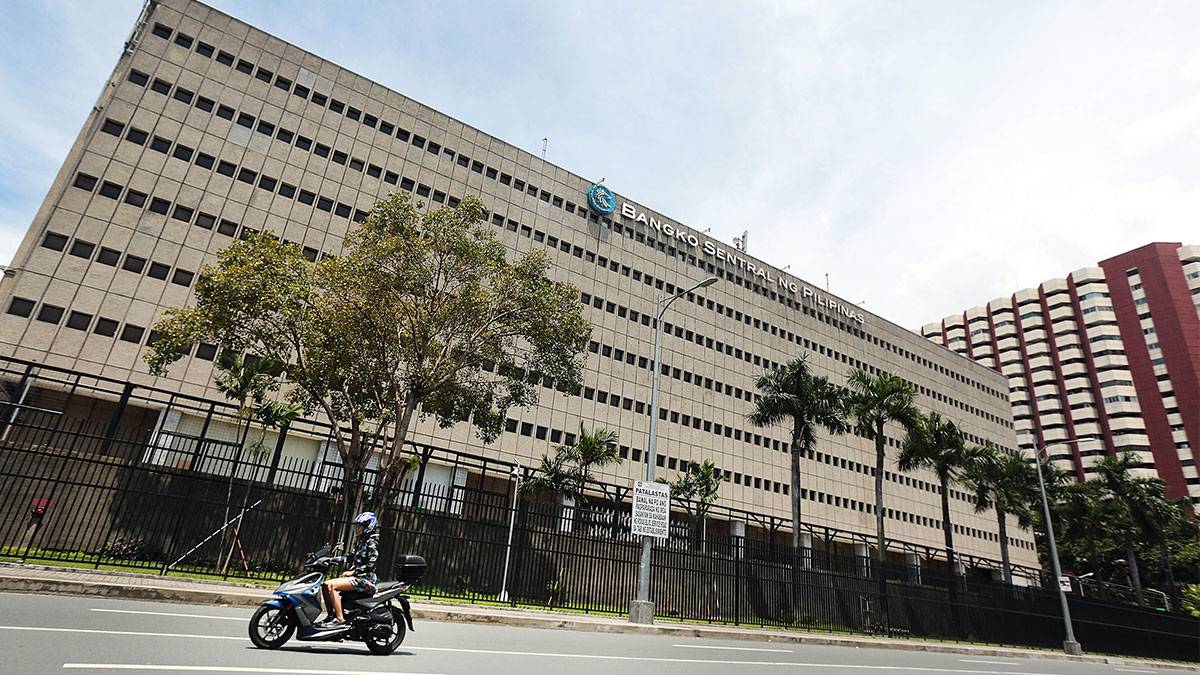
In September, the Bangko Sentral ng Pilipinas (BSP) flagged thousands of illegal businesses on local payment platforms, including online casinos posing as small mom-and-pop stores, according to a Bloomberg report.
It came to light after the BSP identified several merchants processing thousands of small payments, with some worth as little as P50, during the wee hours of the day, which authorities later determined to be online casino bets.
The AMLC noted that such schemes conceal both the operator and the source of funds, placing them outside the reporting regime that covers licensed casinos under the AMLA.
The law only identifies licensed physical and online casinos as covered persons who must report to the AMLC.
According to the state financial intelligence unit, this means banks, electronic money (e-money) issuers, and payment operators are key to detecting suspicious merchants.
“Illegal operators that hide behind merchant accounts sit outside that regime by design,” it said. “Detection therefore falls to the banks, e-money issuers, and payment operators that onboard and monitor those merchants.”
However, the AMLC noted that the prevalence of illegal casinos alone will not determine whether the Philippines is at risk of returning to the Financial Action Task Force’s (FATF) “gray list.”
“Schemes like these do not, by themselves, decide how the country is rated,” the council said. “What the assessors will examine is how the system responds: whether covered persons detect and report the activity, whether the AMLC turns those reports into intelligence that authorities use, and whether supervisors and law enforcement act on it.”
“A scheme that is detected, reported, and shut down is evidence that the system works,” it added.
The country was placed on the FATF’s gray list of jurisdictions under increased monitoring for “dirty money” risks in June 2021 and remained there for over three years. It was removed in February 2025 after passing the watchdog’s evaluation.
The global dirty money watchdog is set to reassess the country in 2027, where it will verify whether the country’s anti-money laundering measures are being sustained and still in place.
Staying off the list, according to the AMLC, requires consistency in the government and institutions’ anti-money laundering efforts, including continued vigilance in addressing emerging risks.
“Any jurisdiction can return to the grey list if its ME (mutual evaluation) results fall short, and the Philippines is no exception,” it said.
“The key question is not whether online gambling, corruption, and fraud exist, but whether our AML/CTF/CPF (anti-money laundering, countering the financing of terrorism, and countering proliferation financing) system is capable of responding to them effectively: whether authorities identify the risks, investigate and prosecute offenders, and recover the proceeds,” it added.
In its third and latest National Risk Assessment published late last year, the AMLC said the Philippines remains under heightened threat of money laundering as it continues to confront financial crimes such as drug trafficking, financial fraud, and tax evasion.
However, it found that the country only faces “medium” vulnerability to money laundering risks, spread across sectors including banks.
The AMLC also noted that the country faces “medium” risks from terrorism financing and proliferation financing.
By sector, banks had medium residual vulnerability to money laundering, while e-money issuers had medium net vulnerability “with high inherent risk moderated by regulatory oversight and improving controls.”
Earlier, the council said it is pushing amendments to the AMLA as part of efforts to strengthen the country’s existing framework and align the law with the FATF’s standards.
This includes expanding the AMLA’s scope of virtual assets, particularly by explicitly designating virtual asset service providers (VASPs) as covered persons.
“The AMLC continues to strengthen its oversight of virtual asset activities through risk-based supervision and close coordination with the BSP and the Securities and Exchange Commission,” the AMLC said.
“On legal authority, the AMLC supports amendments to the AMLA,” it added. “There are several pending bills which include measures that would expressly designate VASPs as covered persons under the AMLA. Express designation would ensure that every provider of virtual asset services is covered by the AMLA, whichever agency licenses it, as FATF Recommendation 15 requires.”
Under the existing provisions, only BSP-supervised VASPs are considered covered persons.
Based on the National Risk Assessment, VASPs’ inherent dirty money risk is high due to the “speed, cross-border reach, and pseudonymous nature of virtual assets.”
However, its overall net money laundering and terrorism financing risk stands at medium-high.
In late September, AMLC Executive Director Ronel U. Buenaventura noted that there are at least five Senate bills containing the proposed amendments pending before the Committee on Banks, while nine House bills are pending before the counterpart committee.
What's Your Reaction?